
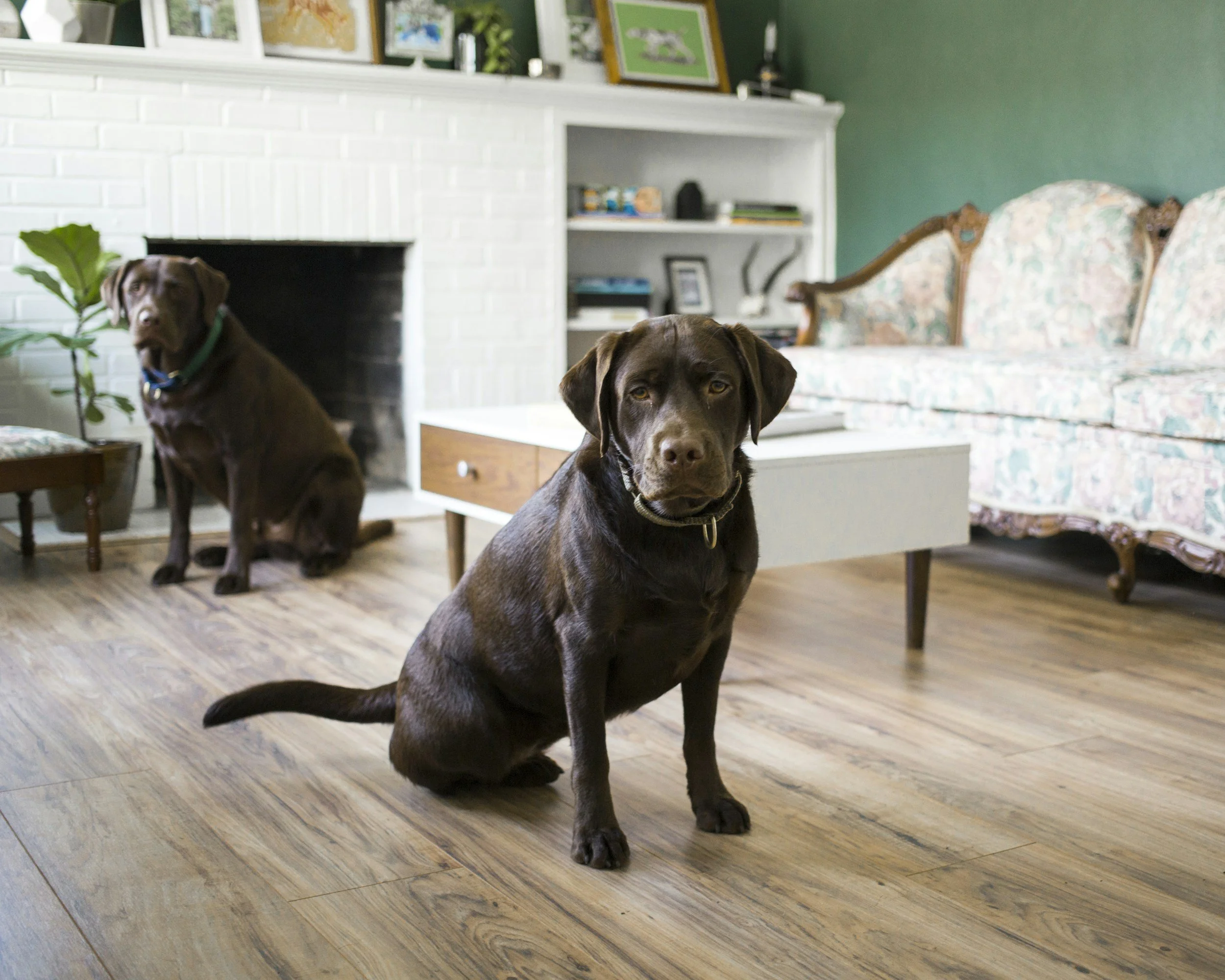
If you share your home with multiple pets—say, a high-energy dog with heavy nails alongside a couple of curious cats—choosing the right flooring isn't just about colour palettes or home value. It’s about durability, safety, and long-term peace of mind.
Standard flooring advice usually gives you the basics: buy tile because it doesn't scratch, or pick vinyl because it's waterproof. While those points are true, standard guides miss the actual disasters that happen in multi-pet households every day.
Here is what you need to know about choosing flooring that stands up to multi-pet living, based on real-world installation experience and genuine pet behavior.
The Multi-Pet Challenge: Accidents, Nails, and Traction
Designing a pet-friendly home requires balancing three competing needs: scratch resistance, liquid protection, and traction.
Hard surface floors like tile and rigid-core Luxury Vinyl Plank (LVP) are top choices for pet owners, and for good reason. They offer incredible protection against spilled water bowls, muddy paws, and unexpected pet accidents. When shopping for LVP, the key is looking for products engineered with rigid cores and heavy-duty, highly scratch-resistant coatings that hold up against heavy dog nails.
However, hard surfaces come with a catch that many homeowners don't consider until after installation: the "skid-out" effect. Smooth hard surfaces can turn your hallway into a slip-and-slide for active dogs and older pets. Losing traction can cause anxiety or injuries to your pets, especially on stairs.

Protecting Your Stairs from Cat Destruction
Stairs are a major problem area in multi-pet homes. Cats are naturally drawn to the edges and sides of stair steps, where they love to stretch, scratch, and pull at the flooring material.
Why Looped and Berber Carpets Fail
If you have cats, looped carpets like berber should be completely avoided on stairs and in high-traffic hallways. Cats can easily hook their claws into the continuous loops of the carpet fiber. Once a single loop is snagged and pulled, the entire row can unspool, leaving shredded risers, ruined carpet edges, and frayed seams at doorway transitions.
The Solution: Short, Dense Cut Pile
If you want the comfort, noise reduction, and traction of soft flooring on your stairs, consider a cut-pile carpet with a short strand and high density.
No loops to snag: Because every fiber end is cut rather than looped, cats cannot dig their claws into the material or pull threads out.
Superior traction: A short, dense cut-pile gives both pets, and humans, solid footing to safely navigate stairs without slipping.
High durability: Dense construction supports heavy foot traffic while resisting matting and wear over time.
Stopping Dog Chewing at Doorway Transitions
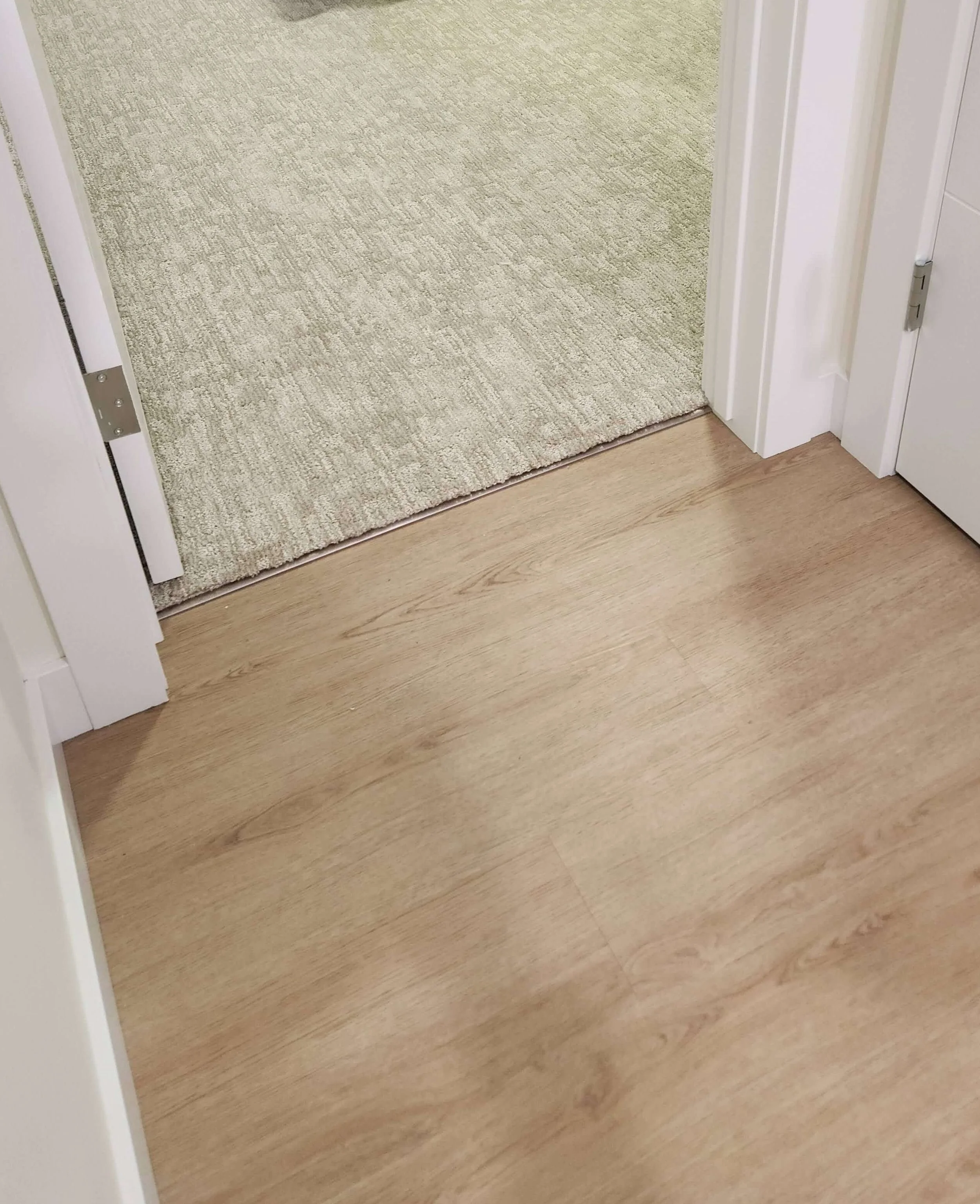
Another common point of failure in pet-friendly homes occurs right at the doorway transition—the seam where two different types of flooring meet.
Dogs often target bulky wood or painted MDF transition strips. Whether prompted by boredom, anxiety, or simply noticing a raised edge, dogs will chew or dig at, and catch their teeth or claws on elevated thresholds, quickly destroying them.
Upgrade to Low-Profile Metal Transitions
Instead of wood, laminate, or vinyl transition pieces, opt for low-profile metal transitions. Flush-fitting metal reducers and T-moldings sit extremely close to the surface of the floor. This eliminates the leverage pets need to get their teeth or claws under the moulding, creating a durable, chew-proof seam between rooms.
Case Study: Solving a Multi-Pet Nightmare
A customer recently came to us struggling with a classic multi-pet problem. Their home was occupied by a large puppy and multiple cats. Their existing Berber carpet on the stairs was completely shredded from pets chewing on and scratching at the steps. The dog was also struggling with slipping on a different set of stairs, so these ones required a surface with good traction.
We implemented a custom, layered solution tailored to how their pets actually used the space:
Main and upper levels: Installed rigid-core Luxury Vinyl Plank for maximum water and scratch resistance across high-traffic living areas.
Stairs: Replaced the ruined Berber with a short, dense, cut-pile carpet. This gave their dog secure traction going up and down while stopping the cats from snagging or pulling threads.
Transitions and nosings: Fitted flush metal transitions along the stair nosings and at all room doorways.
The result was a total success. The short, cut-pile carpet eliminated the cat damage, the dog moves between floors safely without slipping, and the metal transitions prevented any chewing or edge damage. The homeowners were so pleased with the performance that they are now expanding this solution throughout the rest of their home.
Final Advice for Pet Owners
When choosing flooring for a multi-pet home, look beyond basic scratch ratings. Think through how your animals move, where they like to play, and where they tend to cause damage. By pairing rigid, scratch-resistant hard surfaces in main rooms with dense cut-pile carpeting on stairs and low-profile metal transitions at every doorway, you can create a beautiful home that stands up to your pets for years to come.